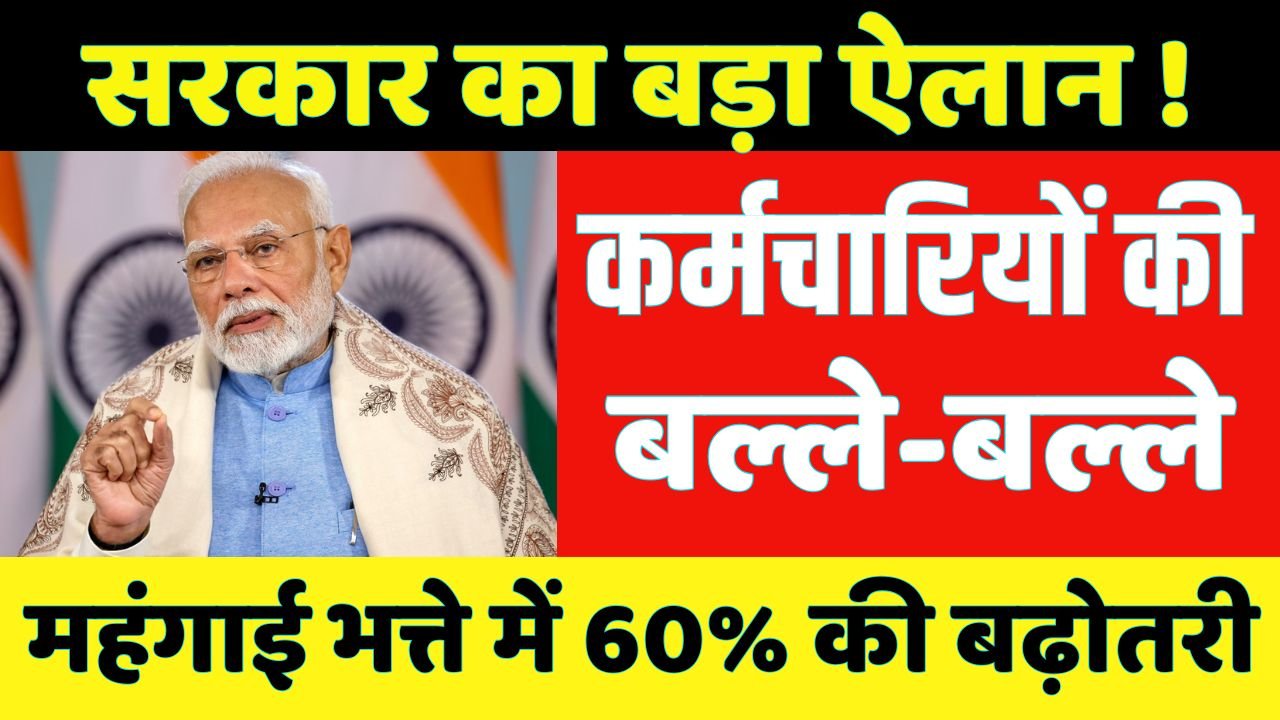
The DA Hike of January 2026 has become one of the most discussed topics among central government employees and pensioners. With Dearness Allowance now reaching the 60% mark, many people are trying to understand what this increase really means for their monthly salary, pension, and overall financial planning. After months of speculation and inflation data tracking, the hike reflects the government’s attempt to balance rising living costs with employee welfare under the 7th Pay Commission.
Dearness Allowance plays a crucial role in protecting employees and pensioners from inflation. As prices of essential goods, housing, healthcare, and transport continue to rise, DA ensures that real income does not lose its value. The January 2026 revision is particularly important because it takes DA to a new psychological and financial milestone of 60% of basic pay.
What Is Dearness Allowance and Why It Matters
Dearness Allowance is an additional component paid over and above the basic salary or basic pension. It is calculated as a percentage of the basic amount and revised twice every year, usually in January and July, based on the All-India Consumer Price Index (AICPI).
For government employees and pensioners, DA is not a small benefit. It directly impacts monthly income, retirement planning, and even future pay commission calculations. When DA rises, it increases take-home pay for employees and monthly pension for retirees, helping them manage daily expenses more comfortably.
How DA Reached the 60% Level in January 2026
The DA reaching 60% in January 2026 is the result of consistent inflationary trends over the past few years. The Labour Bureau’s AICPI data showed steady increases, triggering automatic DA revisions under the 7th Pay Commission formula.
Each DA hike may appear small on paper, such as 2% or 3%, but over time these increments accumulate. Reaching 60% is significant because it indicates that the cost of living has risen substantially compared to the base year used by the pay commission.
Impact of 60% DA on Salary Structure
For serving employees, a 60% Dearness Allowance leads to a noticeable increase in monthly salary. Since DA is calculated on basic pay, employees in higher pay levels benefit more in absolute terms, while lower-level staff gain meaningful relief in managing essential expenses.
For example, if an employee’s basic pay is ₹30,000, a 60% DA means an additional ₹18,000 every month. This amount becomes part of regular income and is revised further whenever DA increases again.
Effect on Pensioners and Family Pensioners
Pensioners are among the biggest beneficiaries of the DA hike. Their monthly pension is directly linked to basic pension, and DA is added to it in the same percentage as serving employees.
For senior citizens who rely primarily on pension income, a 60% DA provides better financial stability, especially in times of rising medical and household costs. Family pensioners also benefit, ensuring some level of income security for dependents.
DA Hike and Its Link with the 8th Pay Commission
One of the most important discussions around the 60% DA level is its possible connection with the 8th Pay Commission. Historically, whenever DA reaches a high percentage, there is speculation about DA merger or revision of pay structures in future pay commissions.
While there is no official confirmation yet, many experts believe that a higher DA strengthens the case for revising pay matrices, fitment factors, and overall salary structures in the next pay commission cycle.
Tax Implications of Higher DA
Dearness Allowance is fully taxable for salaried employees. As DA increases, taxable income also rises, which may slightly increase tax liability depending on the employee’s tax slab.
However, for pensioners, DA is taxed as part of pension income. Those under the basic exemption limit may not face additional tax burden, while others need to plan their finances accordingly.
Why DA Is Crucial During High Inflation
Inflation affects everyone, but government employees and pensioners depend heavily on fixed income. DA acts as a buffer against inflation by adjusting income levels in line with price increases.
The January 2026 DA hike reflects the government’s recognition that inflation has impacted essential expenses like food, fuel, rent, and healthcare. Without DA revisions, real income would gradually erode, making it harder for people to maintain a decent standard of living.
What to Expect After January 2026
After the January 2026 revision, the next DA review is expected in July 2026. If inflation trends continue, further increases are likely. Employees and pensioners should keep an eye on AICPI data and official announcements.
There is also growing discussion around long-term reforms, including pay commission updates, DA merger possibilities, and pension structure improvements, though nothing has been officially finalized yet.
Final Thoughts
The DA Hike January 2026 to 60% is more than just a routine adjustment. It represents financial relief for millions of government employees and pensioners who are dealing with rising costs of living. While it also highlights ongoing inflationary pressures, the increase ensures that incomes remain somewhat aligned with real-world expenses.
As future policy decisions unfold, DA will continue to play a vital role in shaping salary growth, pension security, and overall employee welfare in India’s government sector.